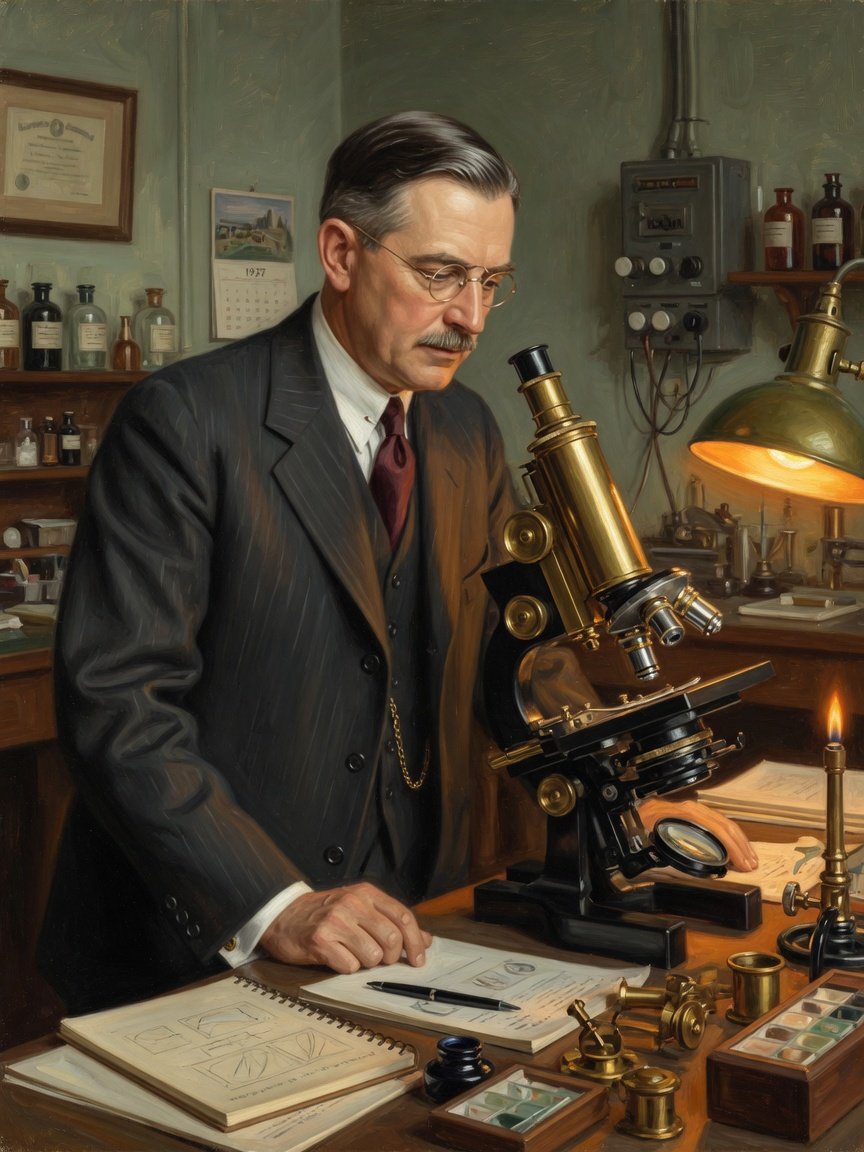
Royal Raymond Rife (1888–1971) occupies a rare place in twentieth-century alternative medical history: part optical craftsman, part bacteriologist collaborator, part controversial inventor of frequency instruments that newspapers and doctors once discussed seriously — and that regulators later rejected.
This chapter rewrites his life for modern readers. It is history education, not a sales pitch, and not a claim that past laboratory stories equal present-day medical proof.
Early formation: optics before fame
Accounts of Rife’s training emphasise years devoted to optics — including study associated with New York and Heidelberg — long before the public “Rife machine” era. He was not primarily marketed as a conventional physician; period medical writing still often styled him “Dr Rife,” a title many associate with honorary recognition and laboratory stature rather than a standard clinical licence narrative.
What set him apart was instrument-building obsession. Supporters describe tens of thousands of experimental runs. Whether every count is exact, the pattern is clear: Rife’s identity was maker-researcher. He designed tools to see what standard optical microscopes of the day could not resolve as easily, then tried to act on what he believed he observed.
The microscope story
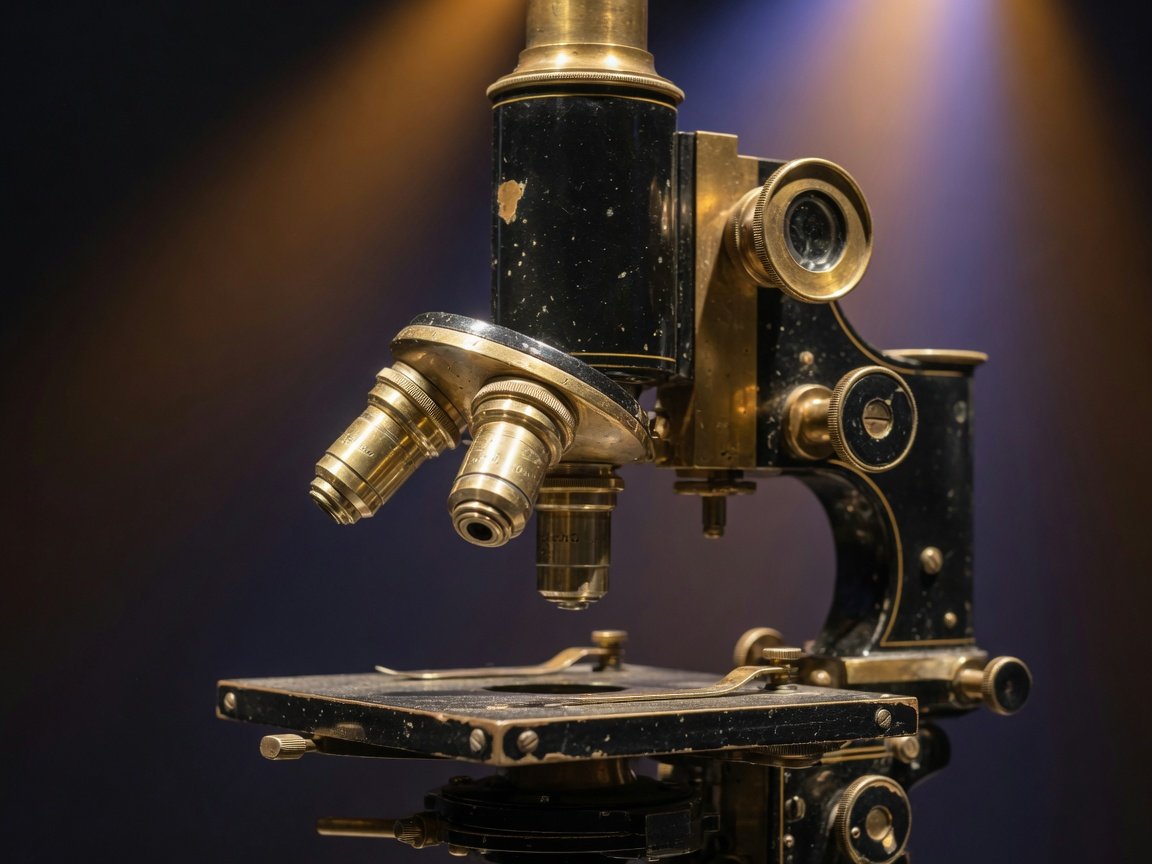
Rife’s high-complexity optical instruments — especially the multi-thousand-part “Universal” class microscopes — are the part of the legend even sceptical readers often respect. Contemporary reporting presented them as mechanical marvels: extraordinary part counts, ambitious magnification claims, and a research goal of observing living microorganisms that filtered or otherwise eluded ordinary methods.
That optical programme sat next to a bacteriological idea later labelled in popular books as related to filterable forms and, controversially, a “cancer virus” line of inquiry (often discussed under names such as BX in later retellings). Collaborators including Arthur Isaac Kendall — a prominent bacteriologist sometimes mythologised as “America’s Pasteur” in promotional literature — were crucial. Without network science, Rife’s microscopes would have been curiosities; with Kendall and others, they entered medical conversation.
From observation to “mortal oscillatory rate”
Rife’s therapeutic hypothesis, as summarised in later obituaries and practitioner lore, was that microorganisms possess characteristic rates of oscillation — and that energy delivered at related frequencies could disrupt them. Early electronic therapy ideas appear in his circle by the early 1920s; public demonstration culture intensifies in the 1930s with ray-tube instruments generically remembered as the Rife Ray.
The technology was not magic from another planet. Specialist researchers stress that many components used standard radio-frequency transmitting ideas of the era. Frequencies themselves cannot be patented as private property of nature — a legal-technical detail that later complicated commercial protection and invited secrecy from some engineers.
Public peak of the 1930s
Dinner photographs with Kendall and Johnson, newspaper features about a “new eye” of the microscope, and clinical experiments in Southern California made Rife briefly legible as a mainstream-adjacent innovator. Doctors such as James B. Couche and Arthur W. Yale later described patient work with the instruments. Rife himself often insisted he was the laboratory man, not the bedside physician — a distinction that still confuses internet summaries.
Decline, bitterness and death
By mid-century the story darkens. Frequency instruments used by some physicians were swept into regulatory conflict. Associates faced legal catastrophe; one partner’s prosecution (later discussed in connection with John Crane) stained the circle even when Rife himself was not the primary target. A 1958 California public health process, as reported in later press, rejected effectiveness claims as inadequately substantiated.
When Rife died in August 1971 after a heart attack — buried from Mt. Hope Cemetery after time in an El Cajon rest home — the Daily Californian framed him as a scientific genius who had lived to see important work discredited, dying nearly penniless. The paper quoted his late-career bitterness toward organised medicine and preserved the line that has become his epitaph-in-quotation: he spent every dime for mankind, ended a pauper, and would do it again.
He also reportedly told a friend that the most important thing he ever did was build a microscope — a reminder that the optical achievement, not only the frequency controversy, is central to any honest biography.
How to hold the legend responsibly
- Do celebrate the instrument-building and collaborative 1930s research culture.
- Do not collapse every archival anecdote into “guaranteed cure” marketing.
- Do correct viral myths (for example, murder legends about Rife or Johnson) when careful documentary projects have challenged them.
- Do separate historical interest from modern complementary frequency sessions offered today.
Next: the machines themselves — microscopes, ray tubes, and the sequence of Rife Ray instruments.