If the biography is the “who,” the instruments are the “how.” Specialist historical projects that spent years locating original machines argue that modern confusion about “true Rife frequencies” comes from not measuring surviving hardware with spectrum tools — and from later redesigns that drifted from 1930s principles.
Microscopes as research engines
Rife’s optical instruments were research platforms, not museum ornaments. Descriptions emphasise extreme mechanical complexity, long optical paths, and illumination strategies aimed at visualising microorganisms in living or near-living states. Blueprint fragments and technical notes preserved in specialist libraries still attract engineers who want to understand what was actually claimed optically versus what later myth inflated.
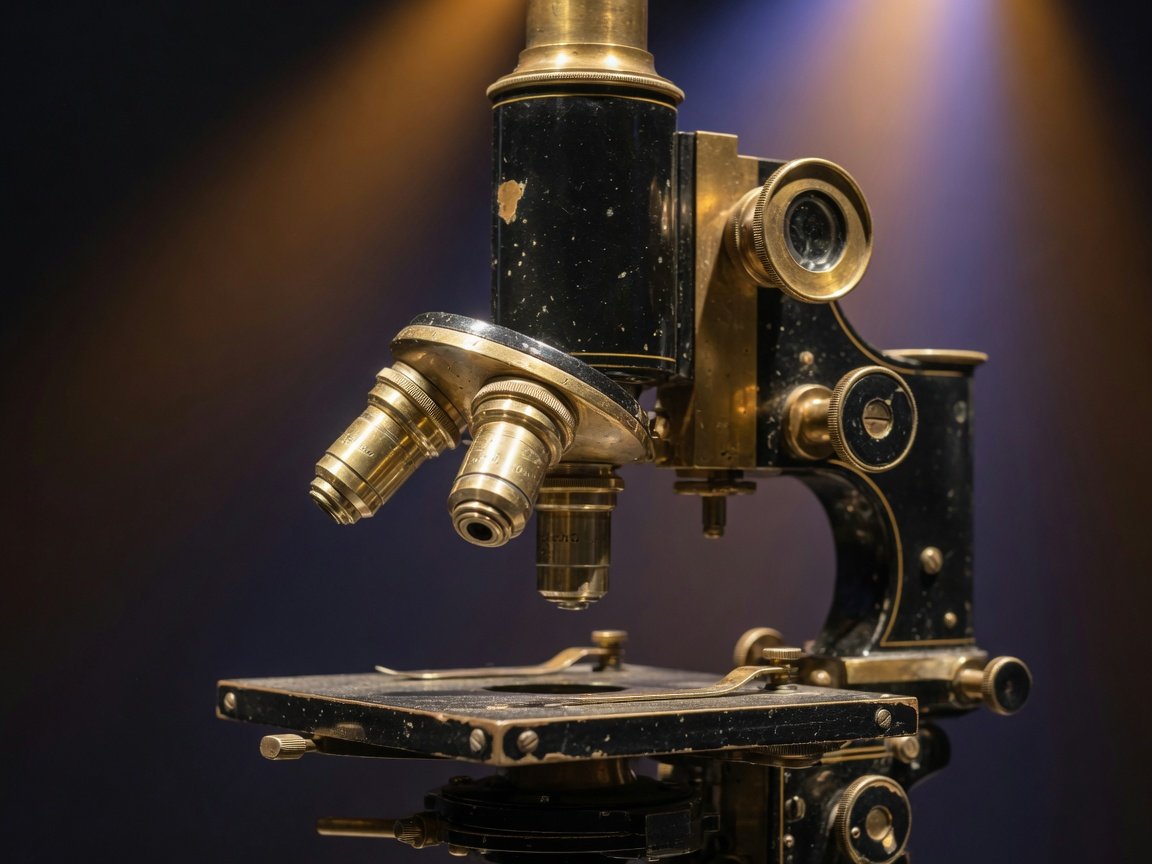
For frequency history, the microscopes matter because they justify the research loop: observe → characterise → attempt energetic interaction → re-observe. Without that loop, ray-tube work looks like pure electrical novelty.
Ray tubes and early Rife Ray generations
Classic Rife-style delivery used a gas-filled tube (a “ray tube” / phanotron-class idea in later language) driven by radio-frequency energy so that luminous plasma became the visible face of the instrument. Early laboratory systems were often multi-component: transmitter sections, amplifiers, and the tube assembly — closer to a radio laboratory than a single plastic consumer box.
Historians of the machines commonly walk through a numbered lineage (popularly discussed as Rife Ray #1 through later clinical designs). Exact cabinet genealogy varies by source, but the arc is consistent:
- Early 1920s–early 1930s laboratory setups — experimental, often physically large, dual-capable in the sense that researchers could pursue precise single-frequency laboratory work.
- Rife Ray #3 era equipment — associated with the mid-1930s clinical demonstration culture (including the 1934 La Jolla period).
- Rife Ray #4 (c. 1935) — more consolidated, portable single-cabinet thinking; two instruments are often said to have been built for Johnson’s and Rife’s use after lessons from earlier gear.
- Rife Ray #5 / Beam Ray Clinical (mid–late 1930s) — the commercially ambitious clinical line engineered in the Beam Ray Corporation period, especially linked to Philip Hoyland.
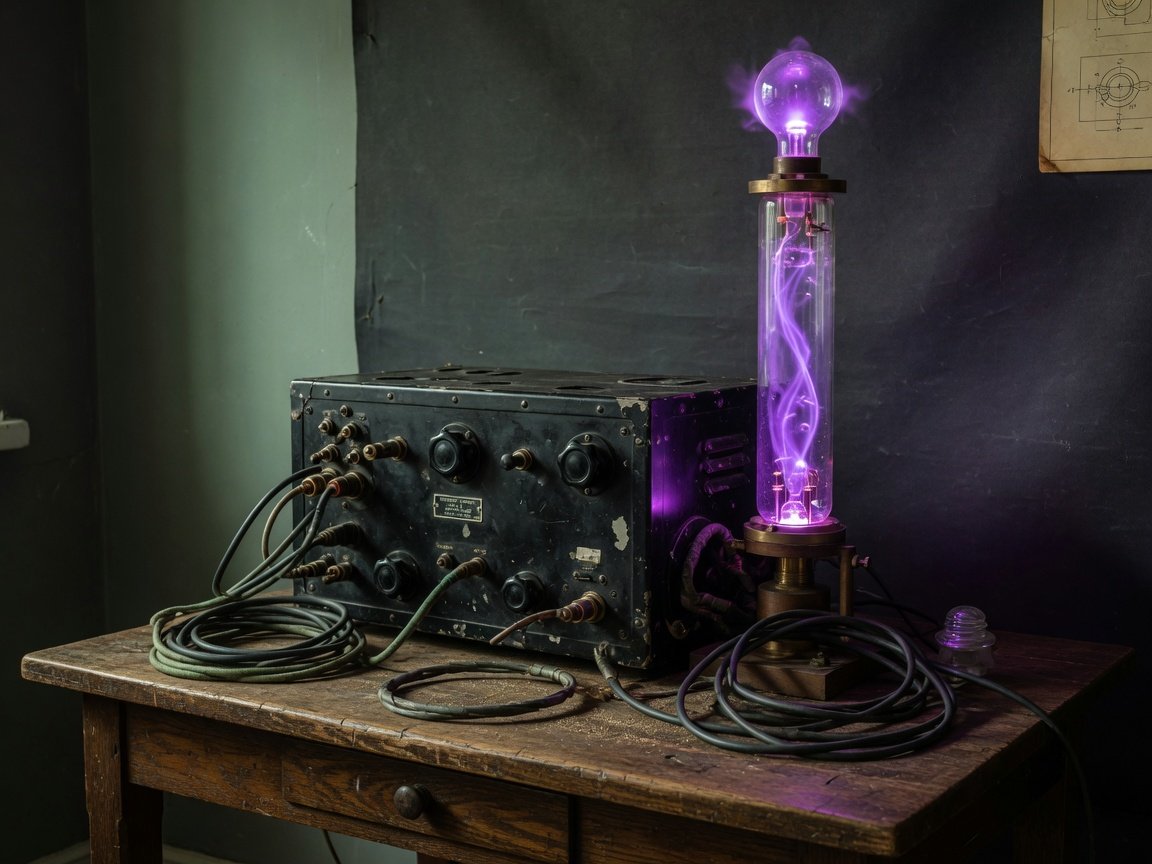
Laboratory vs clinical philosophies
A key technical distinction preserved in specialist reports:
- Laboratory-style instruments tried to make it possible to identify and output highly specific frequencies associated with particular organisms — including approaches that could emphasise a single frequency determination.
- Clinical Beam Ray-class instruments are described as leaning on a two-frequency / harmonic sideband method (including discussion of sweeps in the multi-megahertz region, such as the well-known 3.3 MHz conversation around Hoyland’s work). Rife is said to have been initially sceptical of some two-frequency methods, then more accepting after laboratory checks.
That distinction explains a modern marketplace problem: many low-audio-only generators cannot reproduce the RF carrier and sideband behaviour attributed to original clinical machines — yet still market themselves under the Rife name.
Why original-machine analysis changed the story
Independent researchers who hunted surviving pre-1950 instruments report that only hands-on measurement revealed how audio rates, carriers, and harmonics actually combined. Marketing literature from later decades sometimes simplified the system into “play this Hz list,” omitting power, waveform, and RF delivery constraints that doctors in the 1930s–50s may have taken for granted when they spoke of results.
None of that automatically validates every historical cure story. It does mean that serious history is an engineering history as much as a medical folklore history.
Contact methods and later accessories
Alongside ray tubes, contact accessories (metal hand cylinders, foot plates, wiring) appear in the long Rife ecosystem. Later debates — metal vs crystal-filled cylinders, hand-held tubes vs remote sample methods — belong more to post-Rife commercial culture than to the 1934 clinic itself. They matter today because complementary practitioners still choose among plasma, contact, PEMF and remote-style delivery.
Takeaway for readers
When someone says “Rife machine,” ask: which era, which circuit philosophy, which delivery path, and which evidence standard? The microscopes made Rife scientifically interesting; the ray instruments made him controversial; the surviving hardware made modern reconstruction possible.
Next: the 1934 clinic and the doctors who stood in the room.